




TECHNOLOGY
「CONTROLLING COLOR THROUGH SCIENCE」
We bring pigments to the nanoscale, controlling color at its very source.
Through advanced dispersion and precise particle design, we achieve exceptional color performance.
Explore how we unite vibrant beauty with lasting stability.
-
How Color Works―The Difference Between Dyes and Pigments
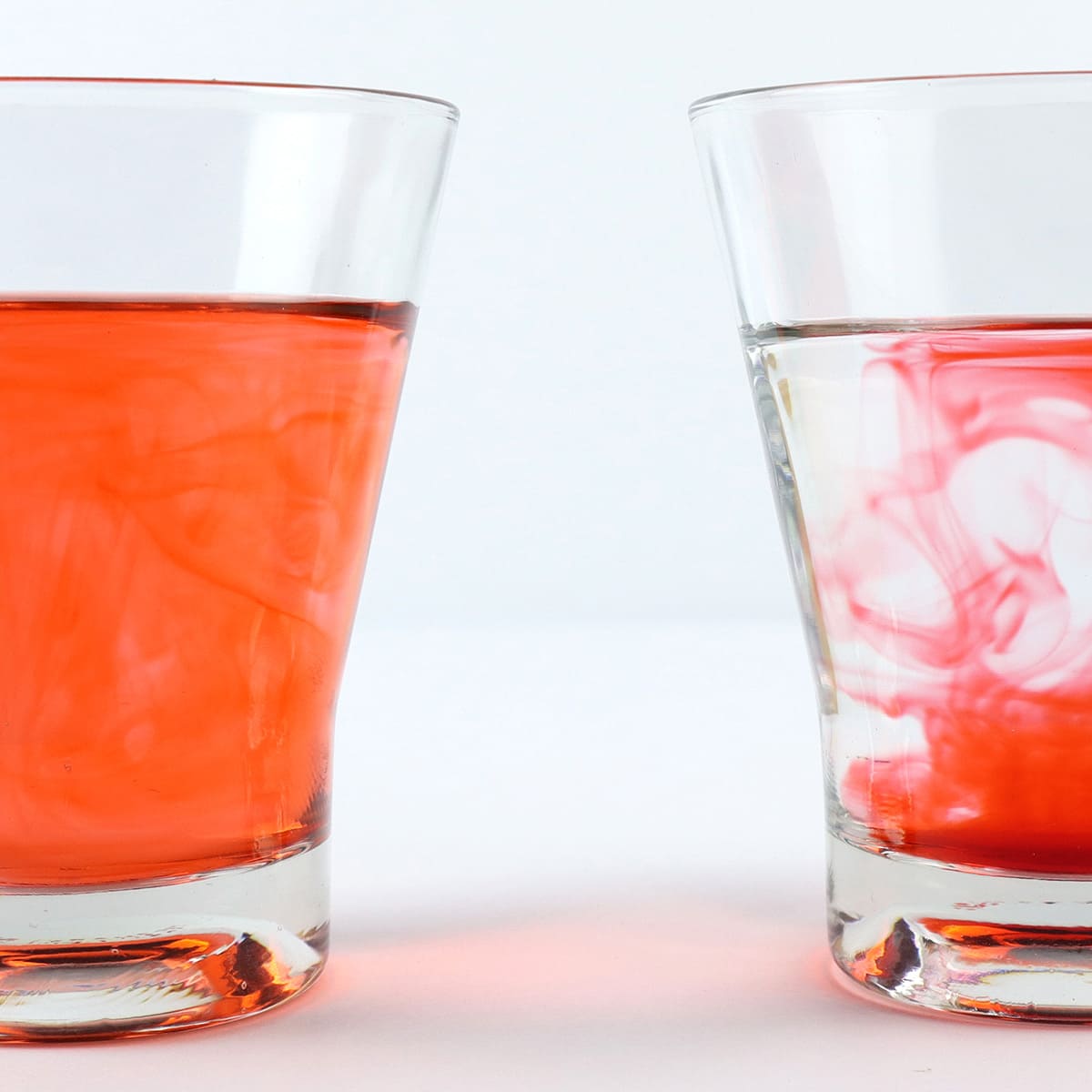
Colorants are broadly classified into two types: dyes and pigments.
Dyes are typically dissolved in water or oil and exist as molecules in a liquid medium. As a result, they offer high transparency and vivid color, but generally have limited resistance to light, heat, and solvents.
In contrast, pigments exist as particles in a liquid medium. Although their color saturation may be lower than that of dyes, they provide superior resistance to light, heat, and solvents.
By reducing pigment particles to a finer scale, their color performance can be significantly enhanced, enabling their use in applications traditionally dominated by dyes.
Through our proprietary micro particle stabilization technology, we support the colors found in everyday life and contribute to expanding the possibilities of colorant applications. -
Dispersion Technology―Disperse the Particles to the Nanoscale
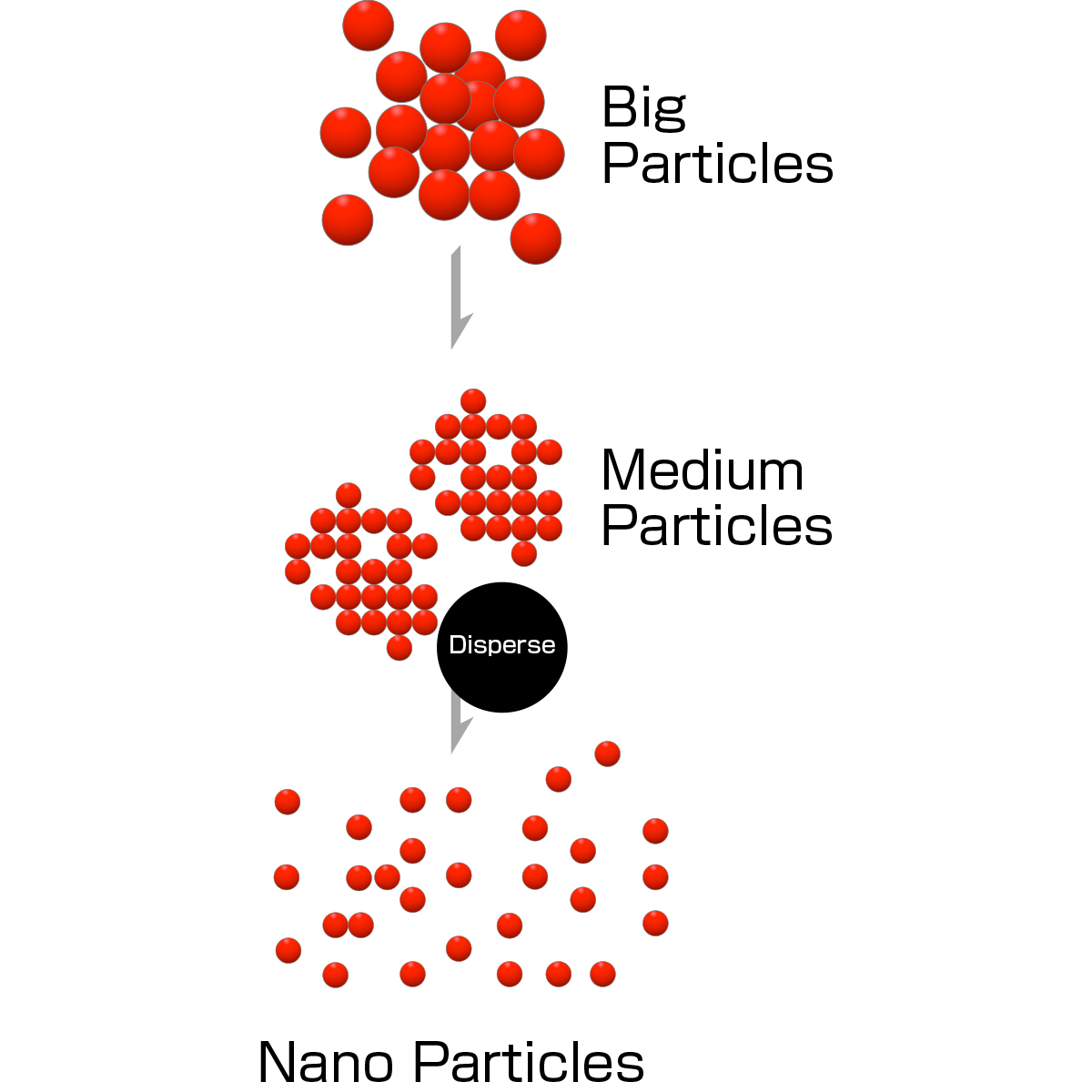
Pigments are originally composed of clusters of fine particles.
When these particles remain large, they scatter light, resulting in dull or muted colors.
We break these clusters down to the nanoscale—one millionth of a millimeter—and stabilize them.
This process of uniformly and stably distributing particles in a liquid medium is called dispersion.
When particles are finely and evenly dispersed, light scattering is minimized, enabling clear and vibrant color.
In other words, dispersion is the first step in achieving beautiful color. -
Stabilization Technology―Preventing Particle Aggregation
Even when particles are finely dispersed, they tend to re-aggregate over time. Preventing this phenomenon—known as aggregation—is the role of stabilization technology.
We design formulations that suppress aggregation by adsorbing additives onto the particle surface, utilizing electrostatic repulsion and steric hindrance effects.
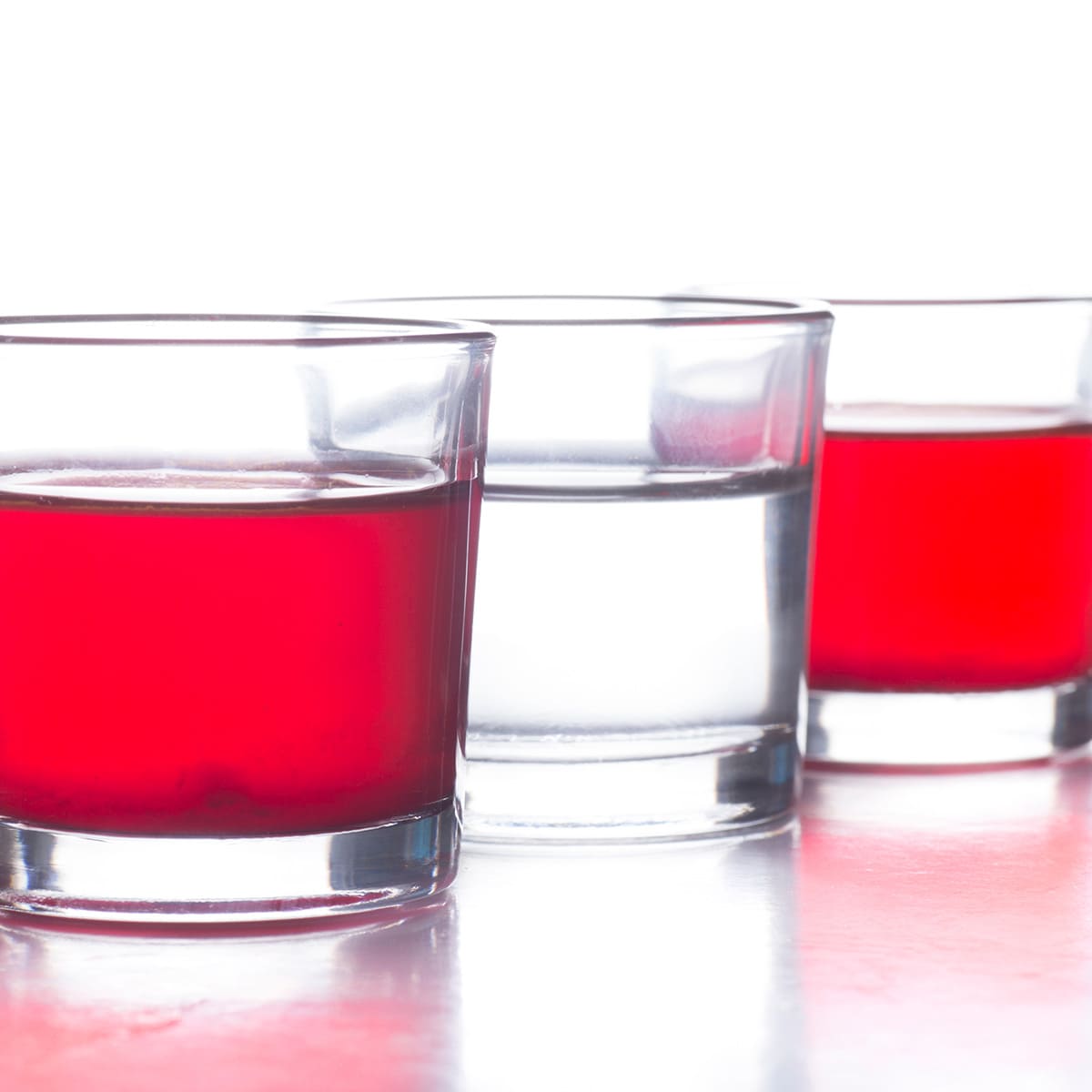
By tailoring our dispersion systems to the properties of both particles and liquids according to each application, we achieve stable dispersions that maintain their performance over time.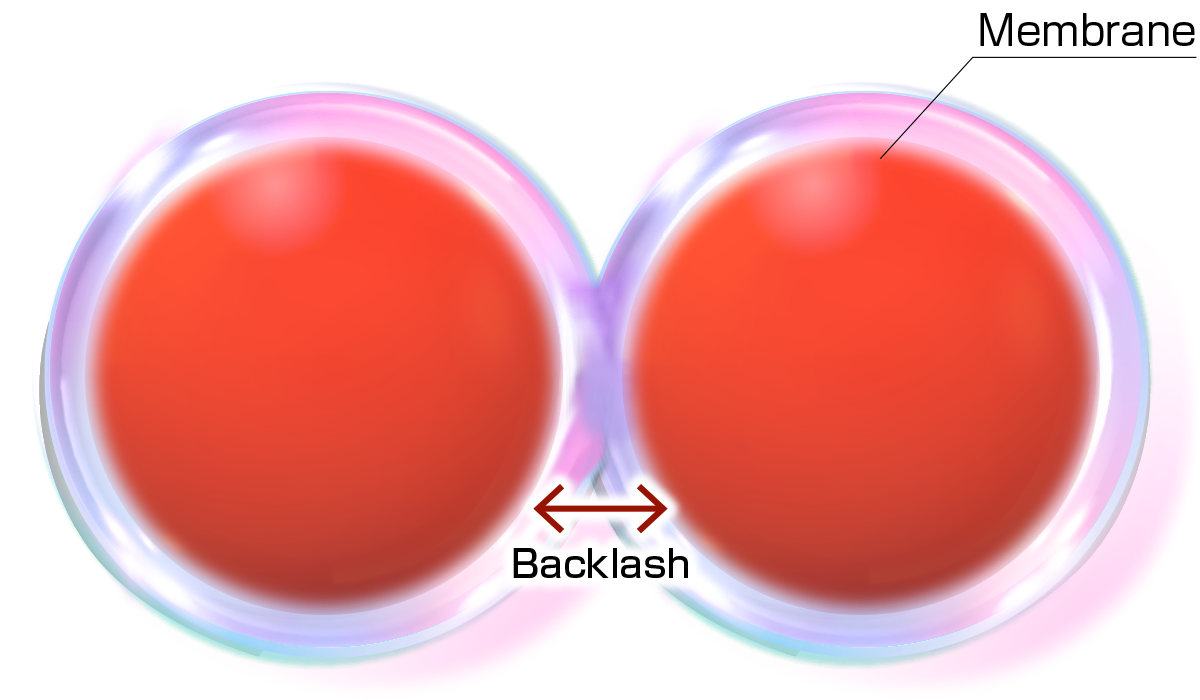
-
Process Technology―Stepwise Design of Ideal Particles
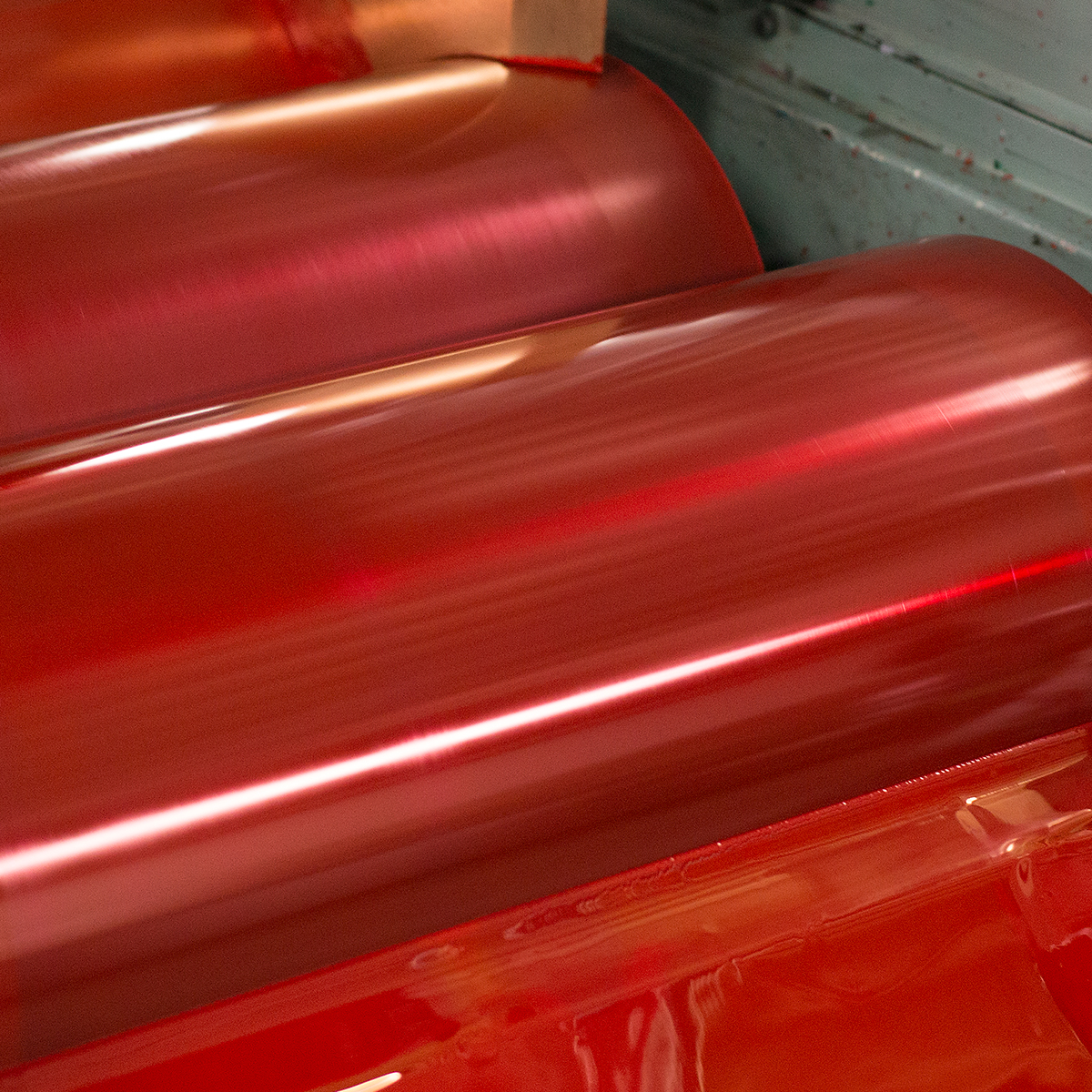
A nanoscale dispersion process is not completed in a single step.
First, a pre-dispersion stage breaks down large particle agglomerates. This is followed by main dispersion, where particles are further refined toward the nanoscale.
To achieve this, we use specialized equipment such as bead mills and roll mills.
Depending on the application and viscosity, we adjust parameters such as bead size and rotation speed, and in some cases utilize ultra-fine beads at a world-leading scale to achieve the optimal particle size.
Through this process, we produce dispersion systems that combine excellent color development with long-term stability. -
Application Design Technology―Tailored “Particle Recipes” for Each Use

Even for the same color such as red, the required performance differs depending on the application—for example, pens, paints, or ink pads.
For pens, smooth writing performance is essential, while paints require uniform coating without unevenness.
We design optimal “recipes” for each application by adjusting particle size and liquid viscosity (thickness).
For example:
Sign pens:Very fine particles and low-viscosity, water-like ink that enables
smooth and continuous writing
Gel inks and Ink pads:Larger particles for strong color development and
reduced bleeding
Coatings/paints:Larger particles with higher viscosity to prevent dripping -
Quality and Safety―Scientific Evaluation and Global Standards
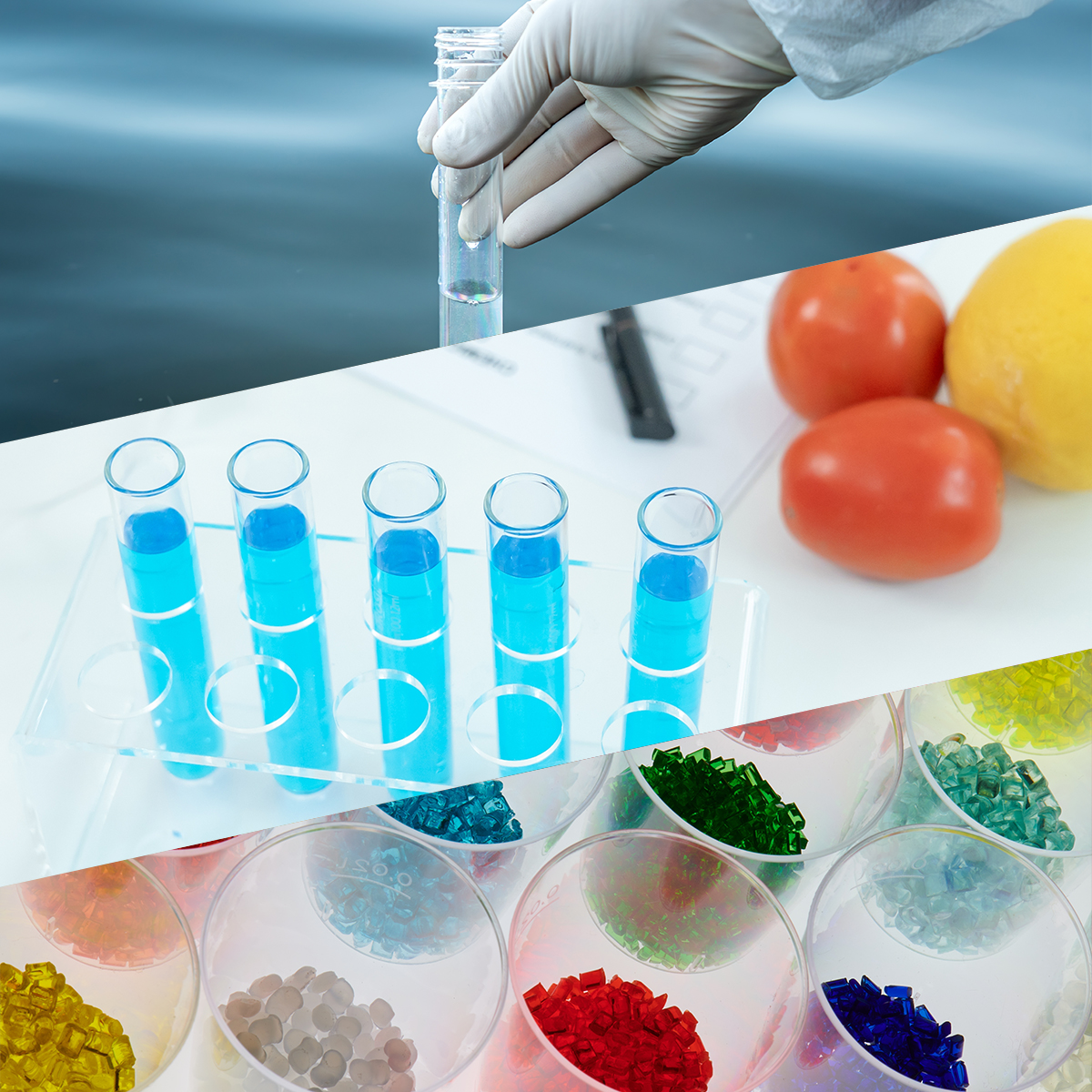
Our dispersion products are not developed solely for visual appearance.
We evaluate stability under various conditions, such as high and low temperatures, by measuring changes in particle size and viscosity over time. This ensures long-term stability even after extended use.
In addition, we take into account global safety and environmental standards, ensuring that our products can be used with confidence worldwide.
Color beauty alone is not our goal—long-term safety and reliability are also an integral part of our technology. -
Summary―The Science Behind Creating Color
Rather than working with dyes that dissolve, our technology focuses on controlling “pigments”—insoluble particles—through the power of science.
This is the origin of our expertise.
We finely process particles(grinding),protect them(stabilization),refine them through controlled processes, and design them according to
each application.
All of these technologies come together to support the colors you encounter in everyday life.


